
Education
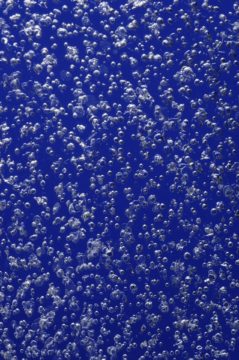
A new climate change artwork – Ice Floor, a new Phase 2 by Wayne Binitie, opens this week at Arup’s Fitzroy Street offices in London. The work was developed in …
Work by year 6 student Rory Braggins modelling the financial and environmental impacts of switching to more environmentally sustainable inhalers has been just been published in BMJ Open. Working with Alex Wilkinson, (British Thoracic Society) and James Smith, (Public Health and Primary Care), Rory’s work demonstrated that large scale switching to dry powder inhalers could be done…
Metered-dose inhalers contain liquefied, compressed gases that act as a propellant to atomise the drug being delivered and to pump it out to the user. Originally chlorofluorocarbons (CFCs), were used as the propellant but these potent greenhouse gases and ozone-depleting substances are now banned. Instead they have been replaced by hydrofluoroalkane (HFA) propellants. While HFAs…
Professor Daniel Bodanski will speak about ‘Law and Politics in the UN Climate Regime: A Preview of the Santiago Climate Conference.’ Followed by a Q&A. Is implementation of the Paris Agreement on track? What are the Agreement’s prospects for success? The talk will review developments in the international climate change regime, including the recently concluded…
Professor Daniel Bodanski will speak about ‘Law and Politics in the UN Climate Regime: A Preview of the Santiago Climate Conference.’ Followed by a Q&A. Is implementation of the Paris Agreement on track? What are the Agreement’s prospects for success? The talk will review developments in the international climate change regime, including the recently concluded…
November 2019: Quantifying risks to critical systems finds that investing into climate change mitigation shows positive returns when compared to the projected costs of climate change impacts; hence reinforces the benefits of avoiding them.
November 2019: special report on oceans and the cryosphere emphasises calls to accelerate a transition to a zero carbon economy and place at least 30% of the world’s oceans under protection. Rising temperatures, acidification, and lower oxygen levels in the oceans are severely impacting human and marine life.